




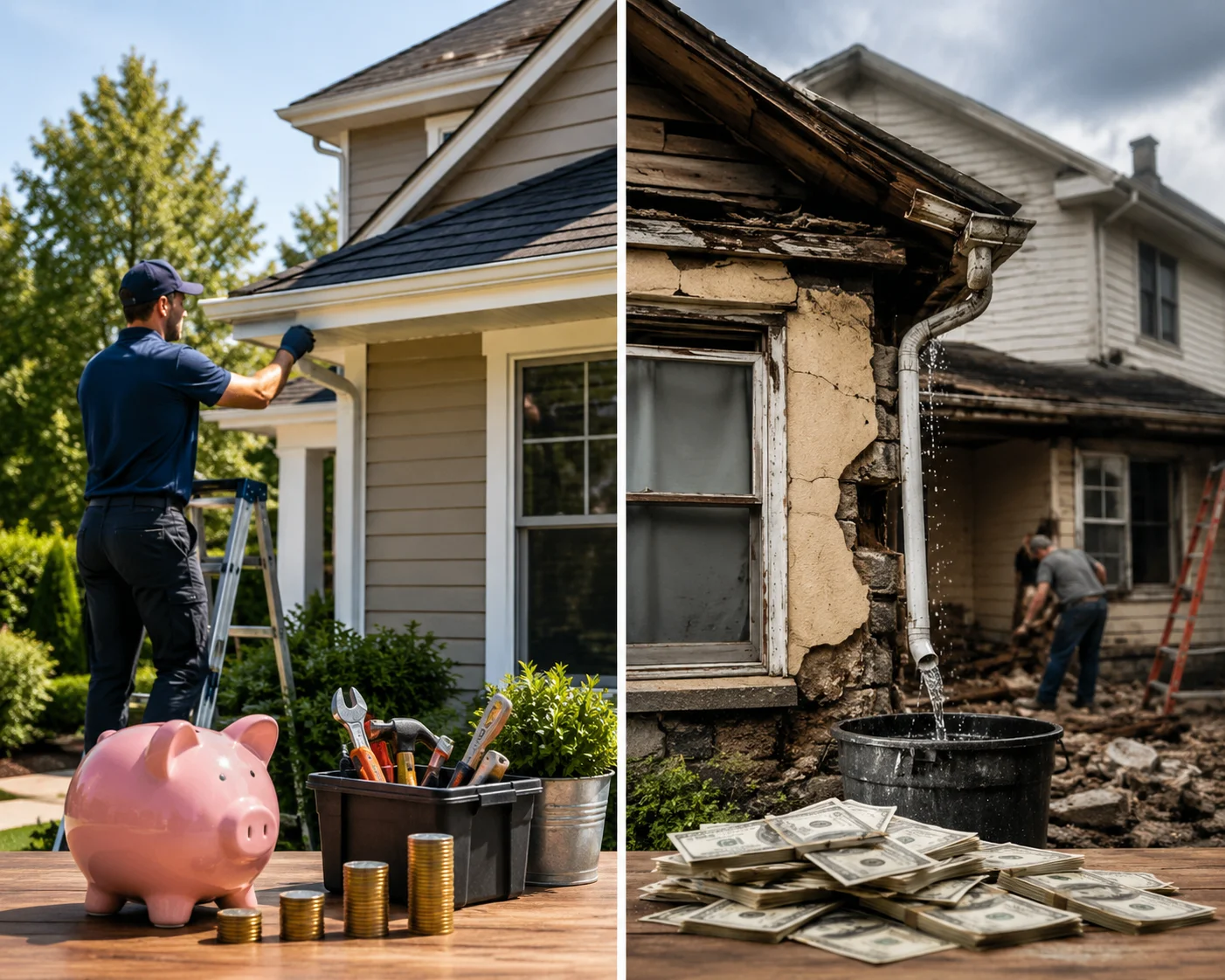
Why Regular Property Maintenance Saves You Thousands
Deferred maintenance is the most expensive decision a property owner can make. A $150 fix today prevents a $3,000 repair in six months. Regular, proactive maintenance protects your investment, retains tenants, and delivers a return that far exceeds its cost.
Talk to any experienced property investor and they'll tell you the same thing: deferred maintenance is the most expensive decision you can make. It doesn't feel expensive in the moment — that's exactly the trap. A leaking faucet costs $150 to fix today. Left for six months, the water damage behind the wall costs $3,000. The pattern repeats at every scale, in every type of property.
Regular, proactive maintenance isn't just a good operating practice — it's one of the highest-return financial decisions a property owner can make.
The True Cost of Deferred Maintenance
The problem with deferred maintenance isn't any single repair. It's the compounding effect of multiple neglected issues building on top of each other. HVAC systems that aren't serviced regularly have dramatically shorter lifespans. Roof issues that go undetected lead to interior water damage and mold remediation. Pest entry points left unaddressed lead to infestations requiring professional treatment and potential unit displacement.
In South Florida's climate specifically — high humidity, hurricane risk, intense heat — the stakes are even higher. Properties that aren't maintained proactively in this environment deteriorate faster than almost anywhere else in the country.
Tenant Retention Has a Real Dollar Value
Here's a connection many property owners don't make explicitly: maintenance quality is directly tied to tenant retention. When tenants see that repair requests are handled promptly and that the property is kept in good condition, they feel respected. They renew leases. They recommend the building to others.
When maintenance is slow or inconsistent, tenants start looking for alternatives the moment their lease approaches renewal. And every tenant turnover costs you — typically one to two months of lost rent when you account for vacancy, cleaning, repairs, and leasing costs. Multiply that across even two or three unnecessary turnovers per year and the number becomes very significant.
What a Proactive Maintenance Schedule Looks Like
A well-run maintenance program is not complicated, but it requires consistency:
Quarterly inspections of HVAC filters, smoke detectors, and plumbing fixtures. Semi-annual exterior checks — roof, gutters, drainage, and any visible structural elements. Annual deep inspections at each tenant turnover, documenting condition and addressing deferred items before the next tenant moves in. Seasonal preparation — particularly critical in Florida, where hurricane season demands specific readiness protocols around shutters, drainage, and outdoor fixtures.
Beyond scheduled items, responsiveness to tenant-reported issues is equally critical. Repair requests acknowledged within 24 hours and completed within a reasonable timeframe set a standard that tenants notice and value.
The Insurance and Legal Dimension
Regular maintenance isn't just about costs and tenant satisfaction — it also protects you legally. Properties in disrepair can create habitability issues that expose landlords to legal liability. In Florida, tenants have specific rights related to habitability, and a documented maintenance program demonstrates that you're meeting your obligations as a landlord.
Properties with documented maintenance histories are also easier to insure and, in some cases, qualify for better premium rates.
Making Maintenance Manageable
The most common reason property owners defer maintenance is overwhelm — no reliable contractors, time constraints, or unpredictable costs. This is exactly where professional property management makes an immediate practical difference. A management company brings established contractor relationships, negotiated pricing, and systems to track, schedule, and document every maintenance item across your portfolio.
The math is simple: properties maintained regularly cost less to operate, hold their value better, keep tenants longer, and are easier to sell. There is no scenario in which deferred maintenance saves you money in the long run.